
Variable Altitude Venus Aerobot
Note: A lot of the work I did on this project was TRLA proprietary and so this will be a bit brief.
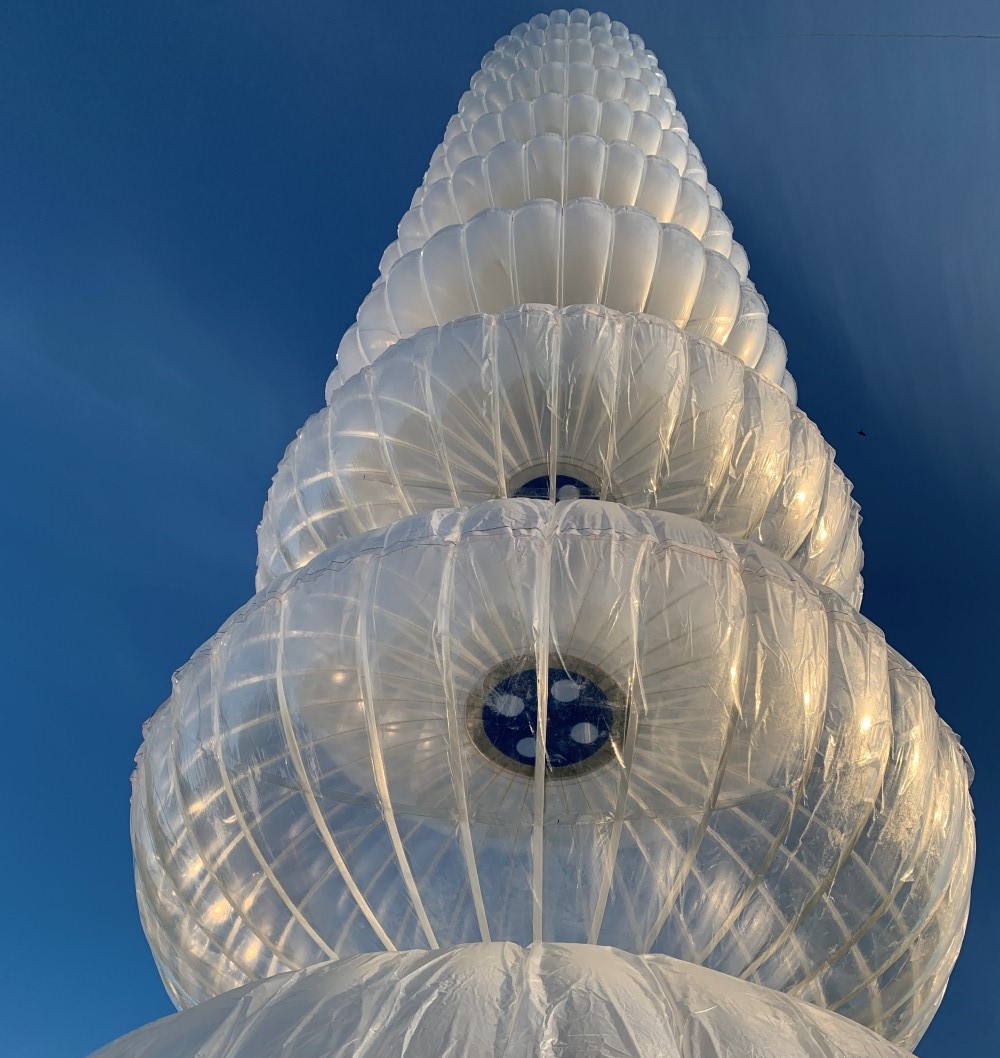
I was pulled in on a NASA SBIR to get the control computer ready for a full-up flight test campaign. We went from a system which would hard reboot every 15 minutes and experience periodic SPI comms failures to a flying balloon with 10 cubic meters of helium! I was responsible for debugging and tuning the PID control loop to accomplish altitude traversal using superpressure control, hand-wiring the final flight computer and groundstation, and manning the controls during the flight test!
Flight testing!


Avionics
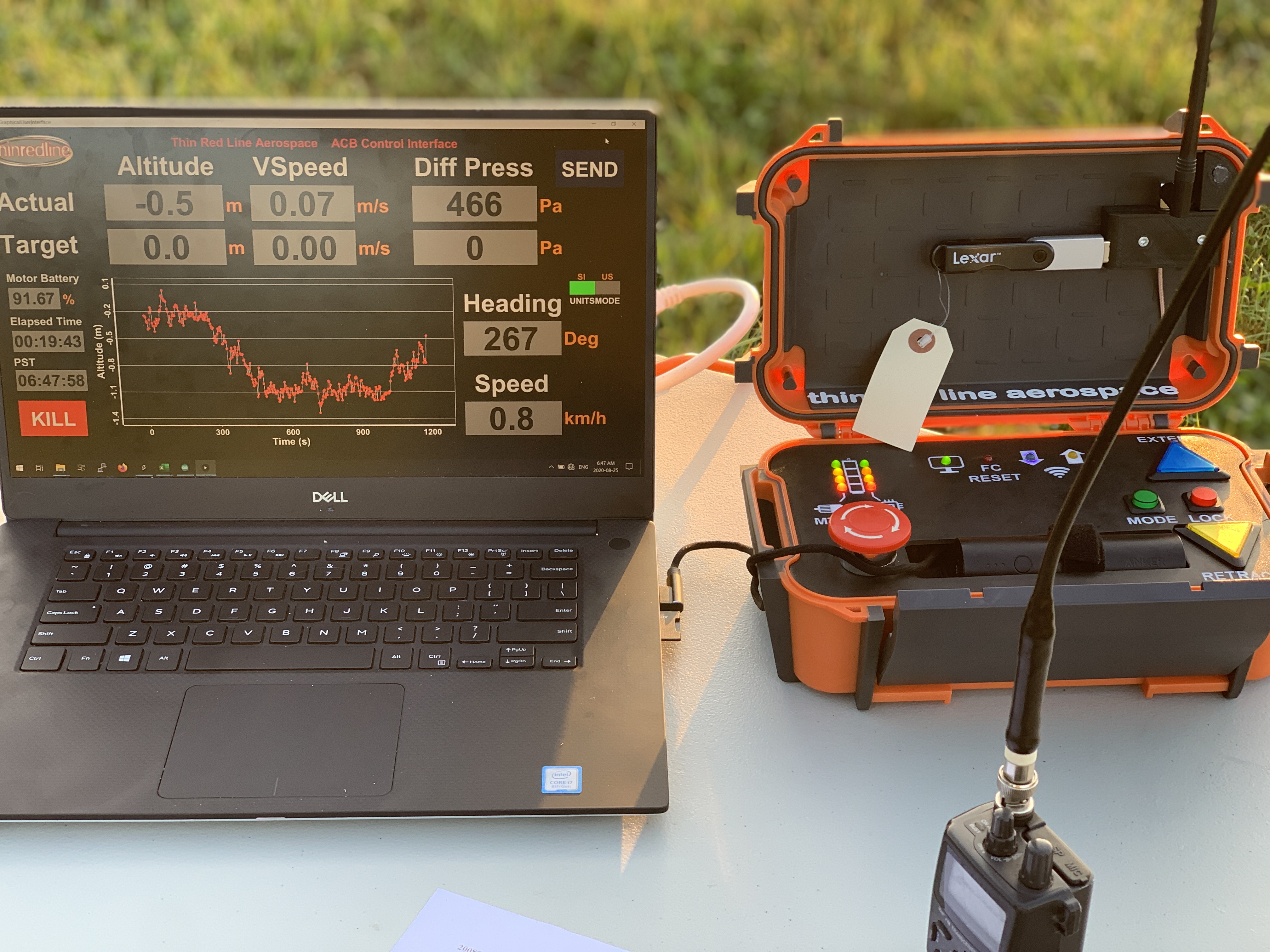
The avionics consisted of a hand-soldered combination of a feather-M0 SAMD-51 microprocessor, dual barometers to measure the balloon superpressure and a LoRa radio for telemetry downlink and command + control of the flight modes:
- Superpressure control
- Velocity control
- Altitude control
A major challenge was robustification of the communicationn protocol to retry or validate partially recieved packets and taking measures to autonomously land the balloon in.
Mechanical compression system
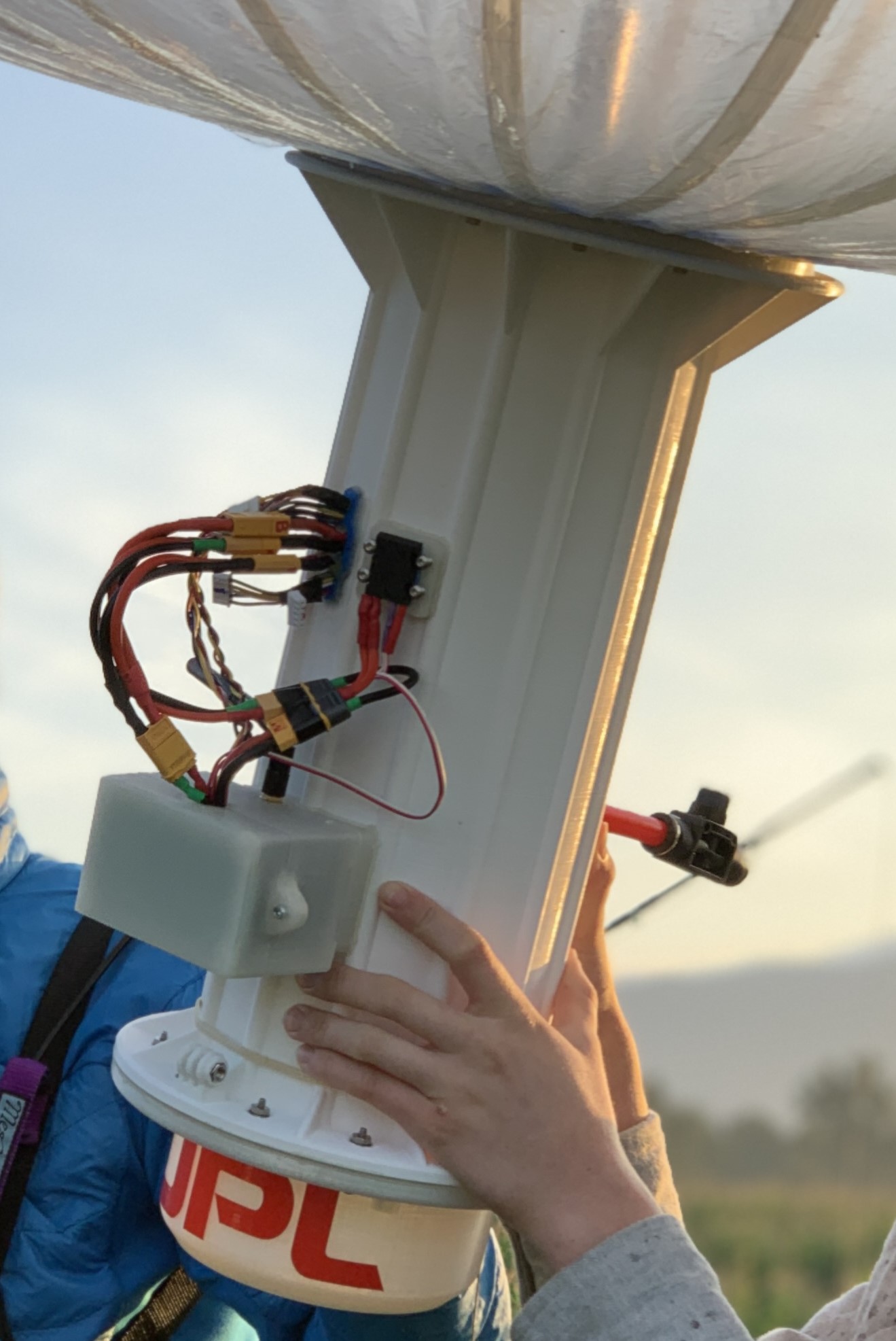
With a high-strength winch at its core, the compression system relies on generating a pressure differential relative to the ambient pressure or “Superpressure”. It is a balance between free lift, the pressure lapse rate in the atmosphere, and minimizing the energy expended to traverse a vertical column. Many calculations for optimal balloon size, compression ratio, and how unbelievably strong the cordage in the winch would need to be.
